
Publishing Scholarly Archaeology since 1997
Publishing Scholarly Archaeology since 1997
Log in | My Account | Basket Twitter Facebook LinkedIn
Advanced Search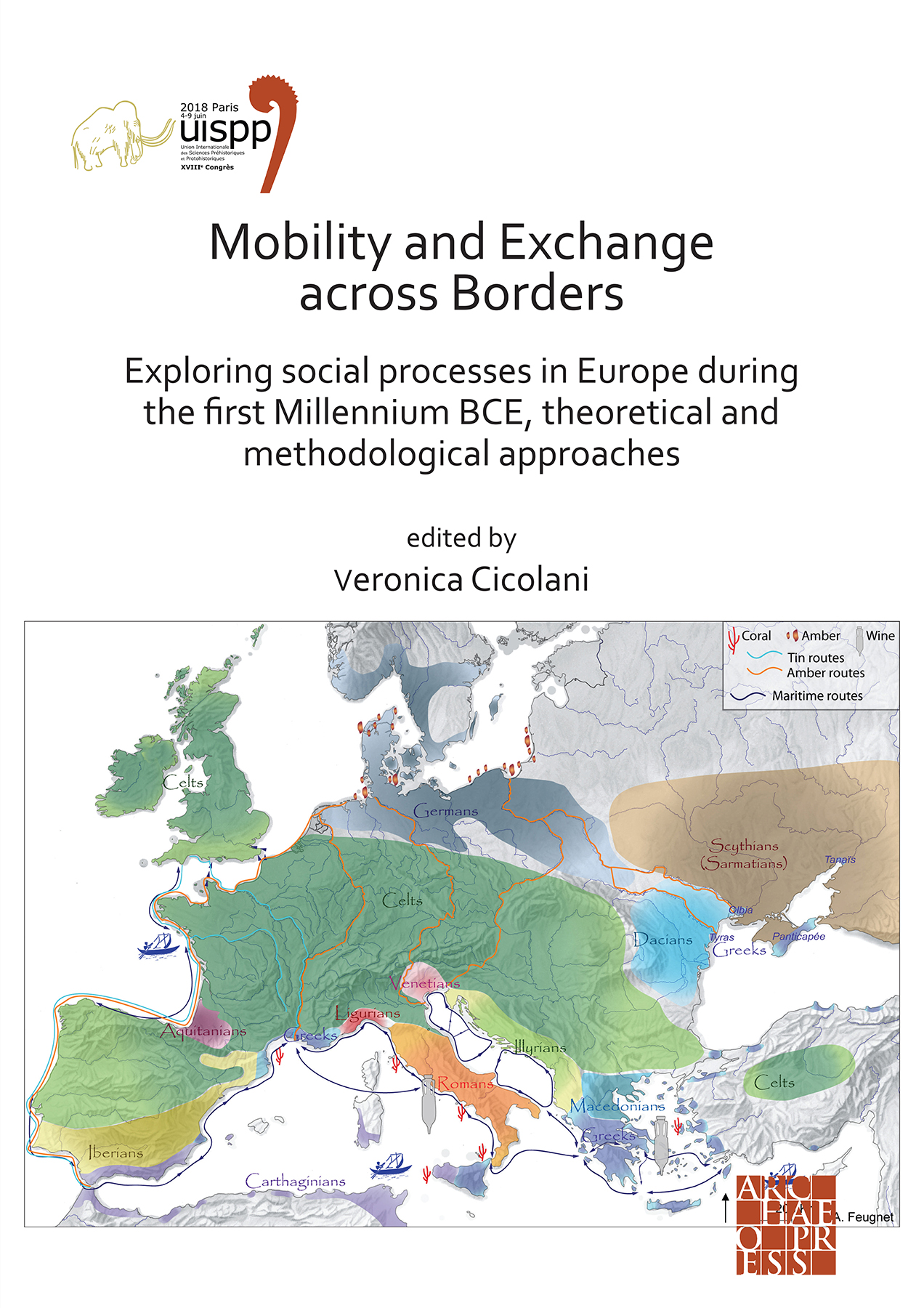
Download Sample PDF
H 290 x W 205 mm
144 pages
Illustrated throughout in colour and black & white
Published Jan 2021
ISBN
Paperback: 9781789697292
Digital: 9781789697308
Keywords
Mobility; Trade; Exchange; Borders; Frontier; Iron Age
Related titles
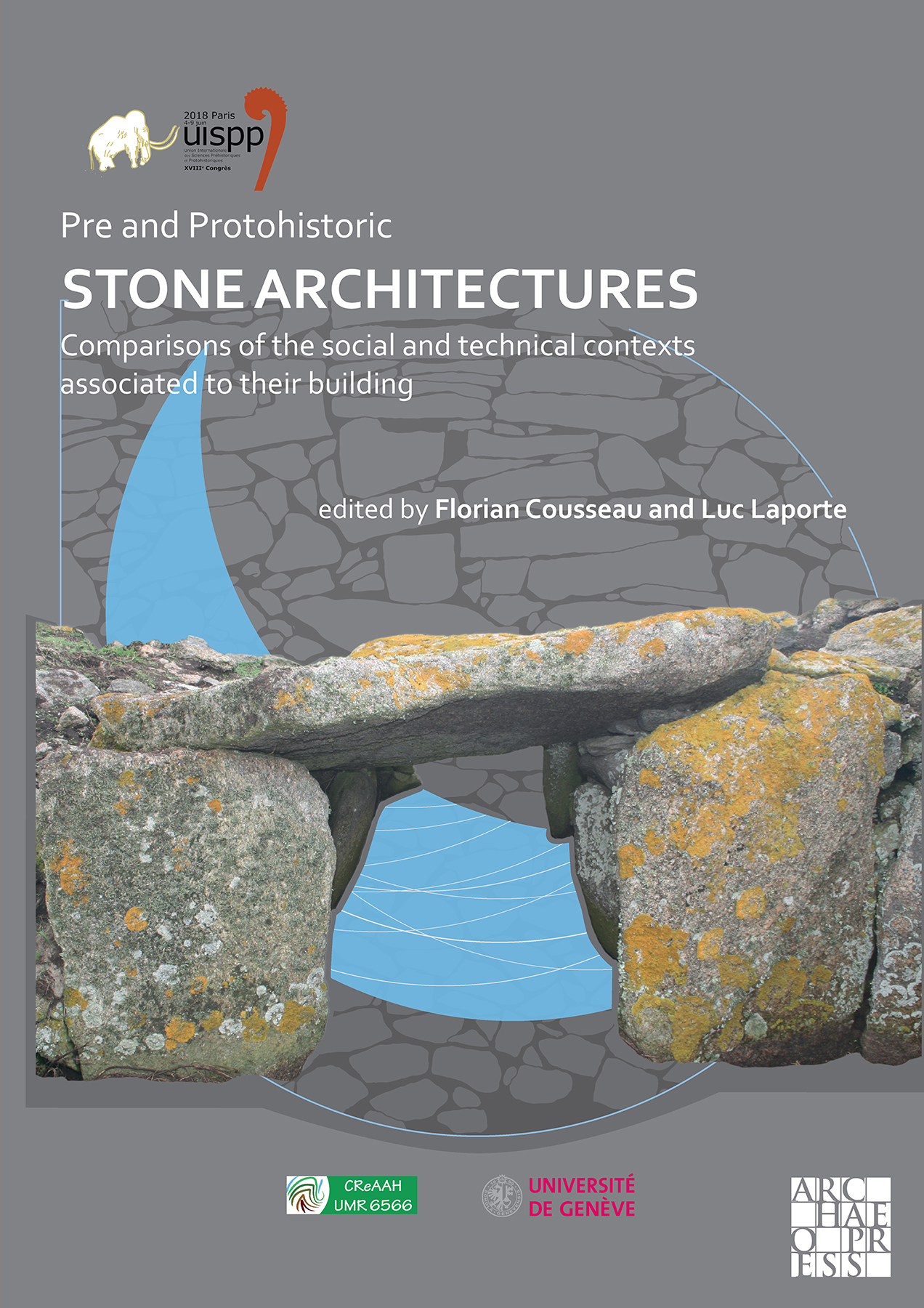
Proceedings of the UISPP World Congress
Mobility and Exchange across Borders: Exploring Social Processes in Europe during the First Millennium BCE – Theoretical and Methodological Approaches
Proceedings of the XVIII UISPP World Congress (4-9 June 2018, Paris, France) Volume 9, Sessions XXXIV-4 and XXXIV-5
Edited by Veronica Cicolani

 Add to wishlist
In recent decades, the study of cultural interactions in the Iron Age has been considerably renewed thanks to the application of new methods and tools, opening the way to new research perspectives. Papers provide different examples from various contexts and regions while applying new methodologies to highlight the diversity of cultural transfers.
Contents
Mobility and Exchange across the Borders. Exploring social processes in Europe during the first Millennium BCE, theoretical and methodological approaches – Veronica Cicolani ;
For an archaeology of exchange networks: methodological approaches and application – Aurélia Feugnet, Clara Filet and Camille Gorin ;
Biological exchanges in protohistoric Gaul: the case of the princely grave of Lavau – Dominique Frère, Elisabeth Dodinet, Nicolas Garnier, Bastien Dubuis and Delphine Barbier-Pain ;
Interpréter les oscillations dans les pratiques funéraires : le genre comme outil d’analyse des évolutions des sociétés – Caroline Trémeaud ;
Metal vessels in Northern Gaul: acculturation or exoticism? – Quentin Sueur ;
Transferts matériels et immatériels au Ve siècle av. J.-C. : les agrafes de ceinture laténiennes en Italie du Nord-Ouest – Linda Papi ;
Un exemple de référentiel graphique de l’âge du Bronze à l’âge du Fer – Vincent Georges ;
Les dynamiques d’échanges sur les marges orientales du monde celtique Les dynamiques d’échanges sur les marges orientales du monde celtique : agglomérations et éléments exogènes aux IVe-IIIe siècles av. n. è. – Julie Clerc ;
Auteurs
About the Author
Veronica Cicolani is a permanent researcher at the CNRS French Institute, AOrOc UMR8546 CNRS-PSL and member of editorial team of Etudes Celtiques. Archaeologist specialist of European protohistory, and of the history of museum collections, her research focuses on technological and cultural interactions between the Italic and Celtic worlds and on Italic craft practices. Since 2005, she has been a scientific collaborator of the National Museum of Saint-Germain-en-Laye (MAN), where she also co-curated the Golasecca French exhibition (2009-2010). She has been involved in international research programmes on Celtic-Italic interactions (DFG Die sitzbanck of Hochdorf, ANR Caecina) and led a French-Italian research program on Ligurian bronze craft production (Labex Archimede 2015-2016). During the past few years, she has been exploring new inter-disciplinary approaches to the study of cultural and technological interactions between the Italic and Celtic worlds.
Archaeopress Publishing Ltd
First and Second Floor
13-14 Market Square
Bicester
Oxfordshire OX26 6AD
United Kingdom
Tel +44 (0) 1865 311914 | fax +44 (0) 1865 512231 | email info@archaeopress.com
