
Publishing Scholarly Archaeology since 1997
Publishing Scholarly Archaeology since 1997
Log in | My Account | Basket Twitter Facebook LinkedIn
Advanced Search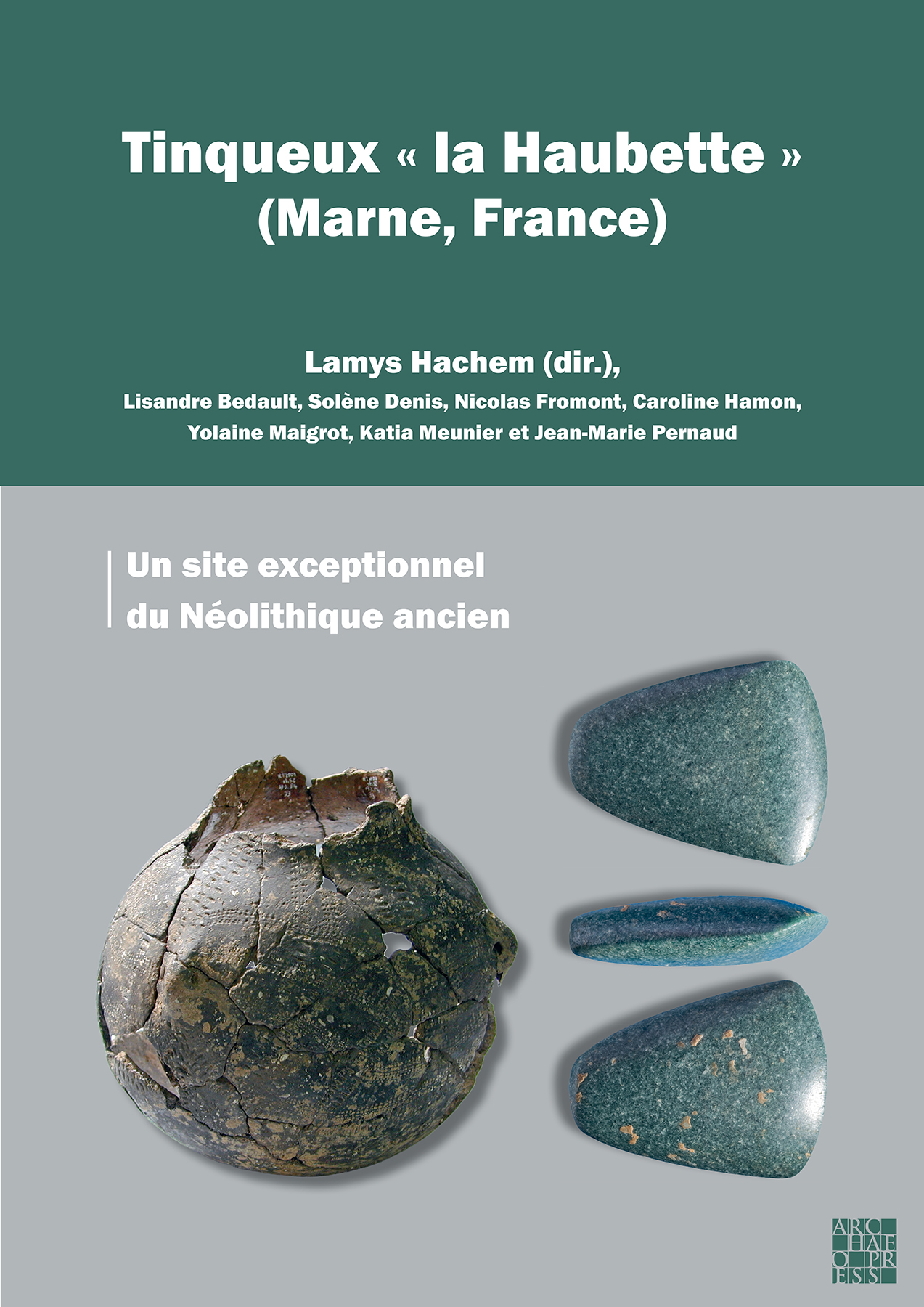
Download Sample PDF
H 297 x W 210 mm
220 pages
92 figures, 30 tables (colour throughout)
French text
Published Sep 2021
ISBN
Paperback: 9781789699760
Digital: 9781789699777
Keywords
Prehistory; Neolithic; BVSG; Architecture; Chronology; France; Marne
Related titles
Tinqueux « la Haubette » (Marne, France): Un site exceptionnel du Néolithique ancien
Edited by Lamys Hachem

 Add to wishlist
This volume presents the results of archaeological work at the Neolithic site of Tinqueux ‘la Haubette’ (Marne) dated to the ‘Blicquy/Villeneuve-Saint-Germain’ (5000-4700 cal. BC). The site comprises five houses, a series of pits, and the remains of an oven. The analyses reveal hitherto unknown facets of the BVSG culture.
Contents
Introduction ;
1. Configuration du village (L. Hachem) ;
Les bâtiments et leurs fosses ;
Les fosses latérales sans bâtiments ;
Les fosses isolées ;
2. Les arbres et les animaux ;
Les charbons de bois (J-M. Pernaud) ;
La faune (L. Bedault) ;
3. Vestiges façonnés de la vie quotidienne ;
La céramique (K. Meunier) ;
L’industrie lithique (S. Denis) ;
L’outillage en matières dures animales (Y. Maigrot) ;
Les parures annulaires en pierre (N. Fromont) ;
Le macro-outillage lithique (C. Hamon) ;
4. Synthèse et conclusion ;
Bibliographie ;
Annexes
About the Author
Lamys Hachem is a researcher in zooarchaeology and pre-history at the Institut National de Recherches Archéologiques Préventives (INRAP). As part of the team Trajectoires « De la sédentarisation à l’Etat » (UMR 8215 of CNRS and Paris I-Sorbonne University), her research and publications focus on the societies of the Early, Middle and Final Neolithic period, particularly in the northern half of France, where she has led teams performing preventive archaeological excavations for more than two decades.
Archaeopress Publishing Ltd
First and Second Floor
13-14 Market Square
Bicester
Oxfordshire OX26 6AD
United Kingdom
Tel +44 (0) 1865 311914 | fax +44 (0) 1865 512231 | email info@archaeopress.com
