
Publishing Scholarly Archaeology since 1997
Publishing Scholarly Archaeology since 1997
Log in | My Account | Basket Twitter Facebook LinkedIn
Advanced Search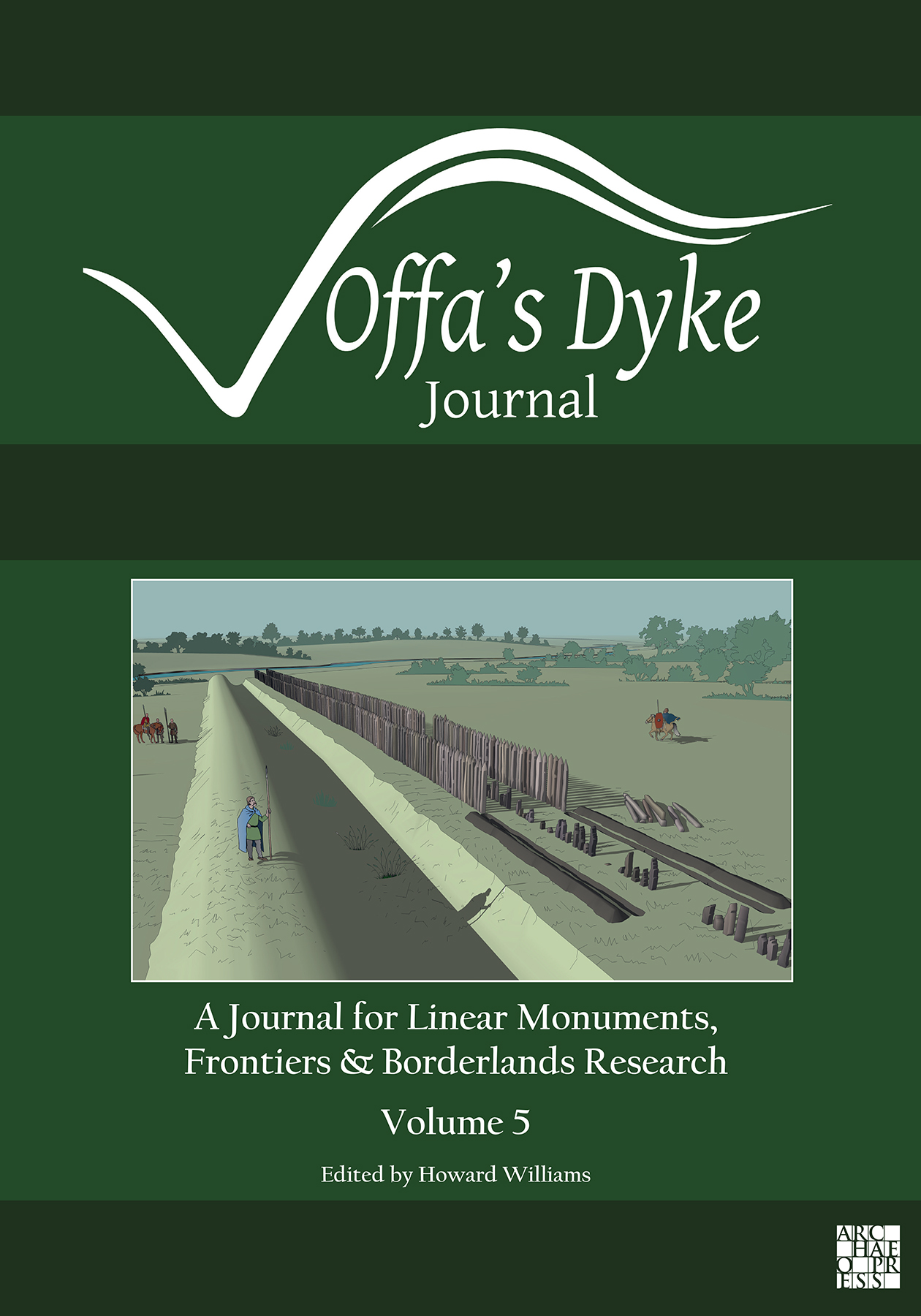
Download Sample PDF
H 250 x W 176 mm
270 pages
Illustrated throughout in colour and black & white
Published Nov 2023
ISBN
Paperback: 9781803276502
Digital: 9781803276519
Keywords
Anglo-Welsh Border; Archaeology; Anglo-Saxon; Borderlands; Early Medieval
Related titles
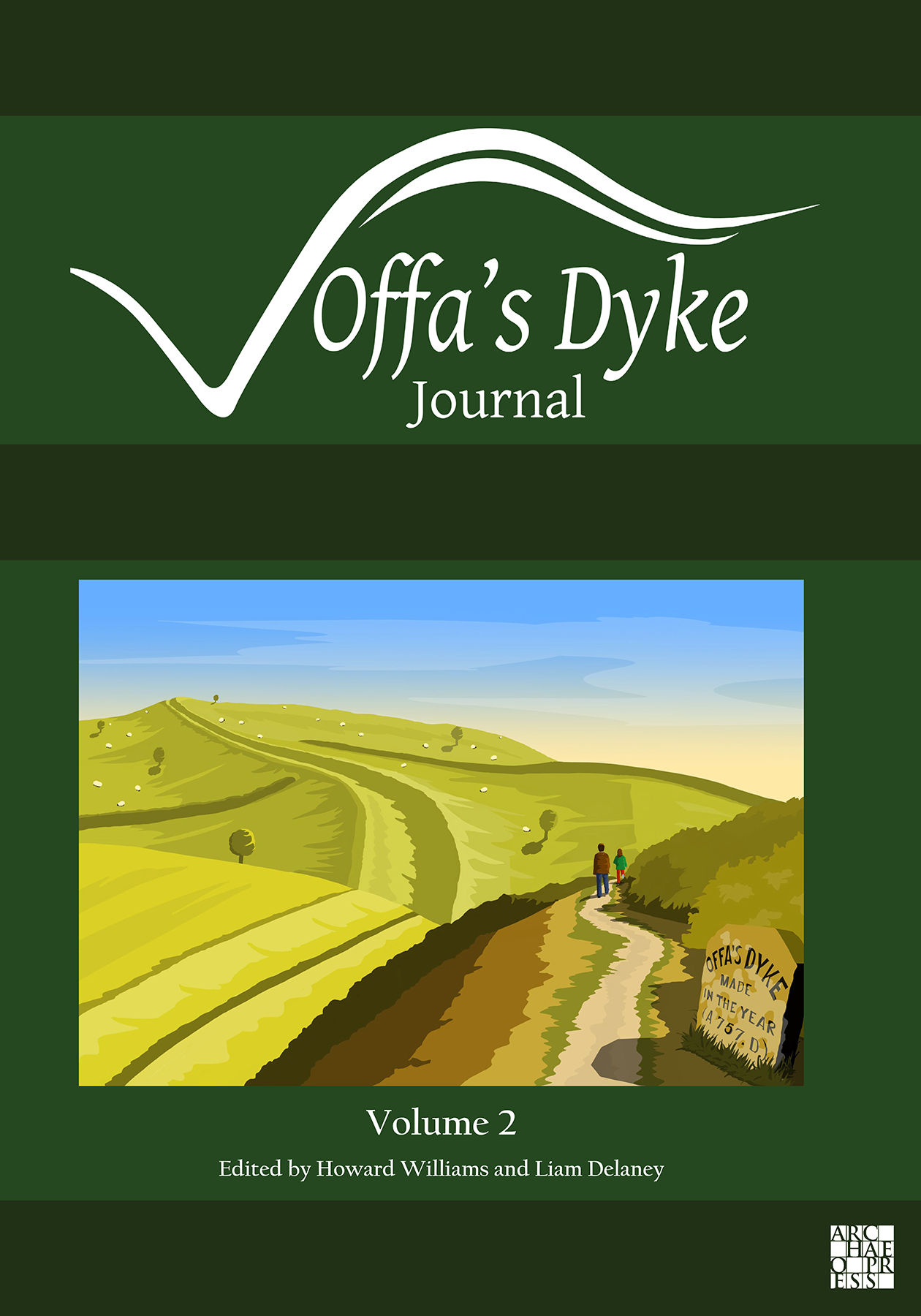
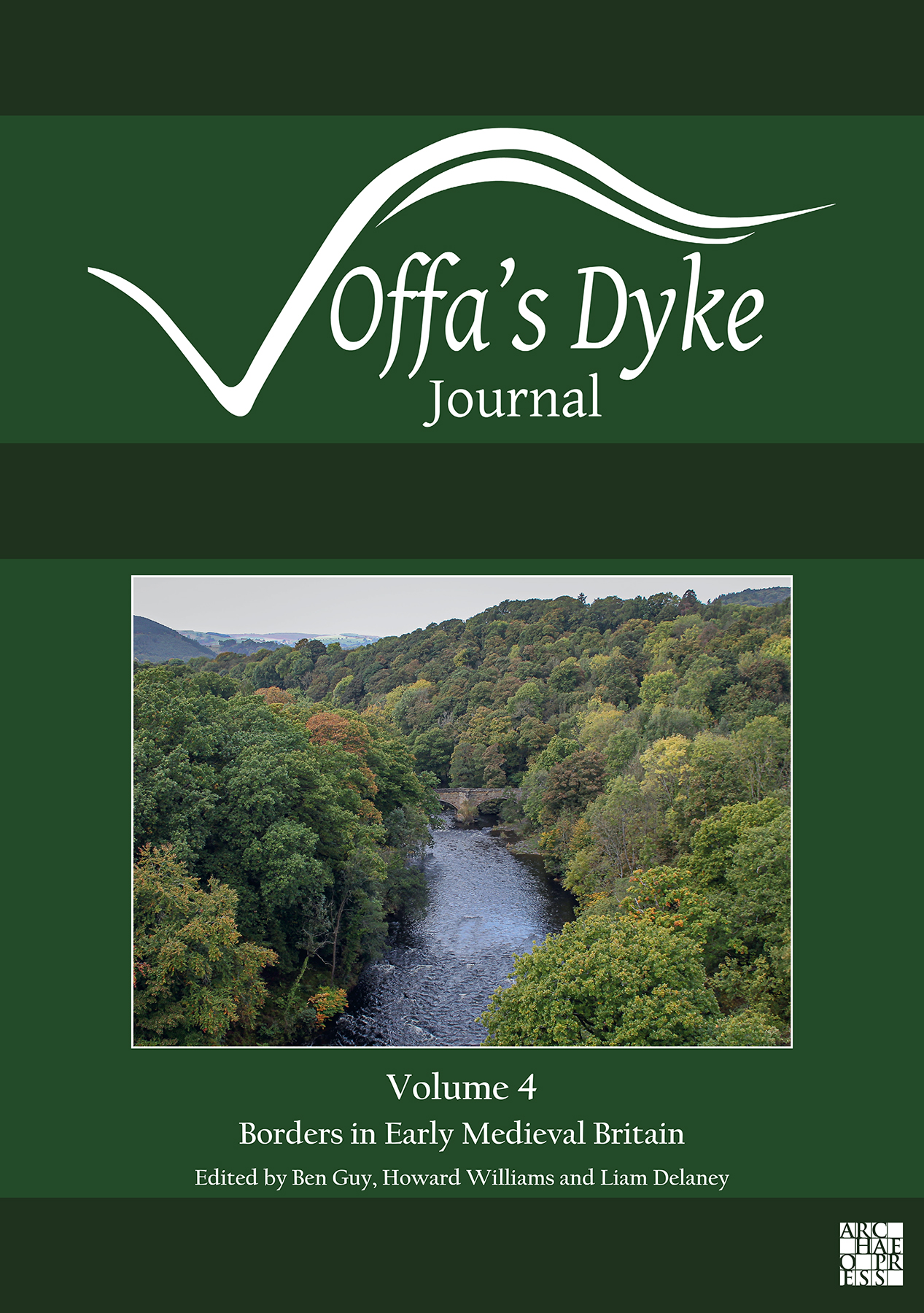
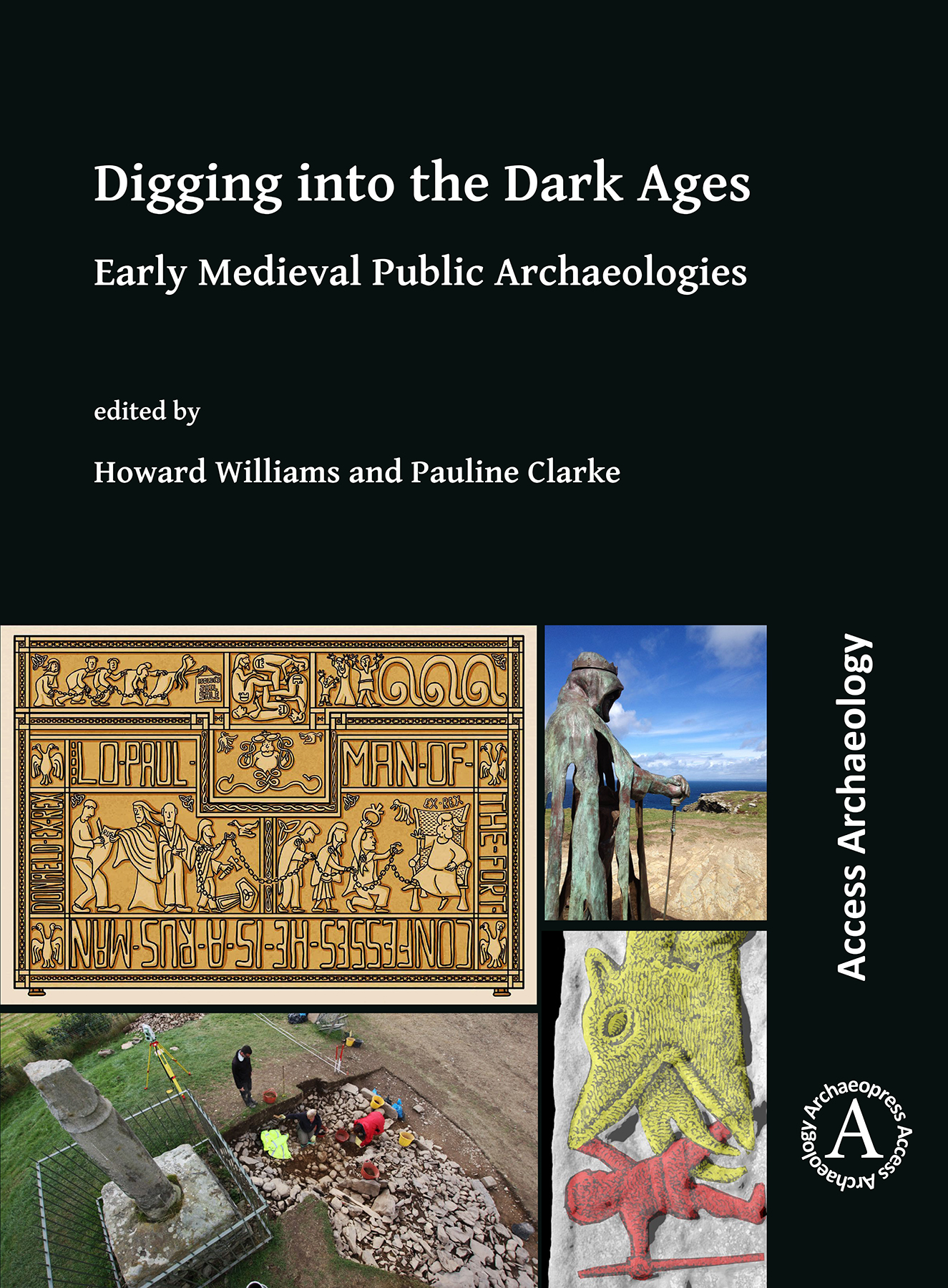
Offa's Dyke Journal: Volume 5 for 2023
A Journal for Linear Monuments, Frontiers and Borderlands Research
Edited by Howard Williams

 Add to wishlist
Volume 5 of Offa's Dyke Journal, a venue for the publication of high-quality research on the archaeology, history and heritage of frontiers and borderlands focusing on the Anglo-Welsh border.
Contents
Linear Pasts and Presents: Researching Dykes, Frontiers and Borderlands – Howard Williams
Insights from a Recent Workshop on Walls, Borders, and Frontier Zones in the Ancient and the Contemporary World – Gideon Shelach-Lavi, Tal Ulus and Gideon Avni
The Olger Dyke: An Early Roman Iron Age Linear Earthwork in Denmark – Lisbeth Christensen
The Current State of Research on Early Medieval Earthworks in East Central and Southeastern Europe – Florin Curta
The Serpent Ramparts in Ukraine: Fifty Years of Archaeological Research – Florin Curta
‘Cofiwn i Facsen Wledig/We remember Macsen the Emperor:’ Frontiers, Romans, and Welsh Identity – Roger H. White
The Linear Earthworks of Cornwall: What if They Were Early Medieval? – Erik Grigg
Rethinking Offa’s Dyke as a Hydraulic Frontier Work – Howard Williams
Evaluating the Early Medieval Portable Antiquities Scheme Data for the Welsh Marches – Pauline Clarke
Treaties, Frontiers and Borderlands: The Making and Unmaking of Mercian Border Traditions – Morn Capper
Border Culture and Picturing the Dyke – Dan Llywelyn Hall, Gillian Clarke, Gladys Mary Coles, Menna Elfyn, Oliver Lomax and Robert Minhinnick
Commentaries
Reflections on Walking with Offa – Diana Baur
The Past in the Time of Covid: The Art of Dan Llywelyn Hall – John G. Swogger
Art on the March – Howard Williams
About the Author
Howard Williams is Professor of Archaeology at the University of Chester and researches public archaeology and archaeologies of death and memory. He co-edits the Offa’s Dyke Journal and writes an academic blog: Archaeodeath.
Reviews
‘This volume of eleven articles and three notes adds significantly to the corpus of knowledge about international examples of linear monuments and their interpretation, based on historic and recent excavations, and on our understanding of the period in which they may have been constructed. … This discussion is delivered by a diverse authorship and provides a very different perspective on how monuments and borderlands can be perceived by modern societies, irrespective of their historical integrity.’ – Tim Malim (2024): Archaeologia Cambrensis 173
Archaeopress Publishing Ltd
First and Second Floor
13-14 Market Square
Bicester
Oxfordshire OX26 6AD
United Kingdom
Tel +44 (0) 1865 311914 | fax +44 (0) 1865 512231 | email info@archaeopress.com
