
Publishing Scholarly Archaeology since 1997
Publishing Scholarly Archaeology since 1997
Log in | My Account | Basket Twitter Facebook LinkedIn
Advanced Search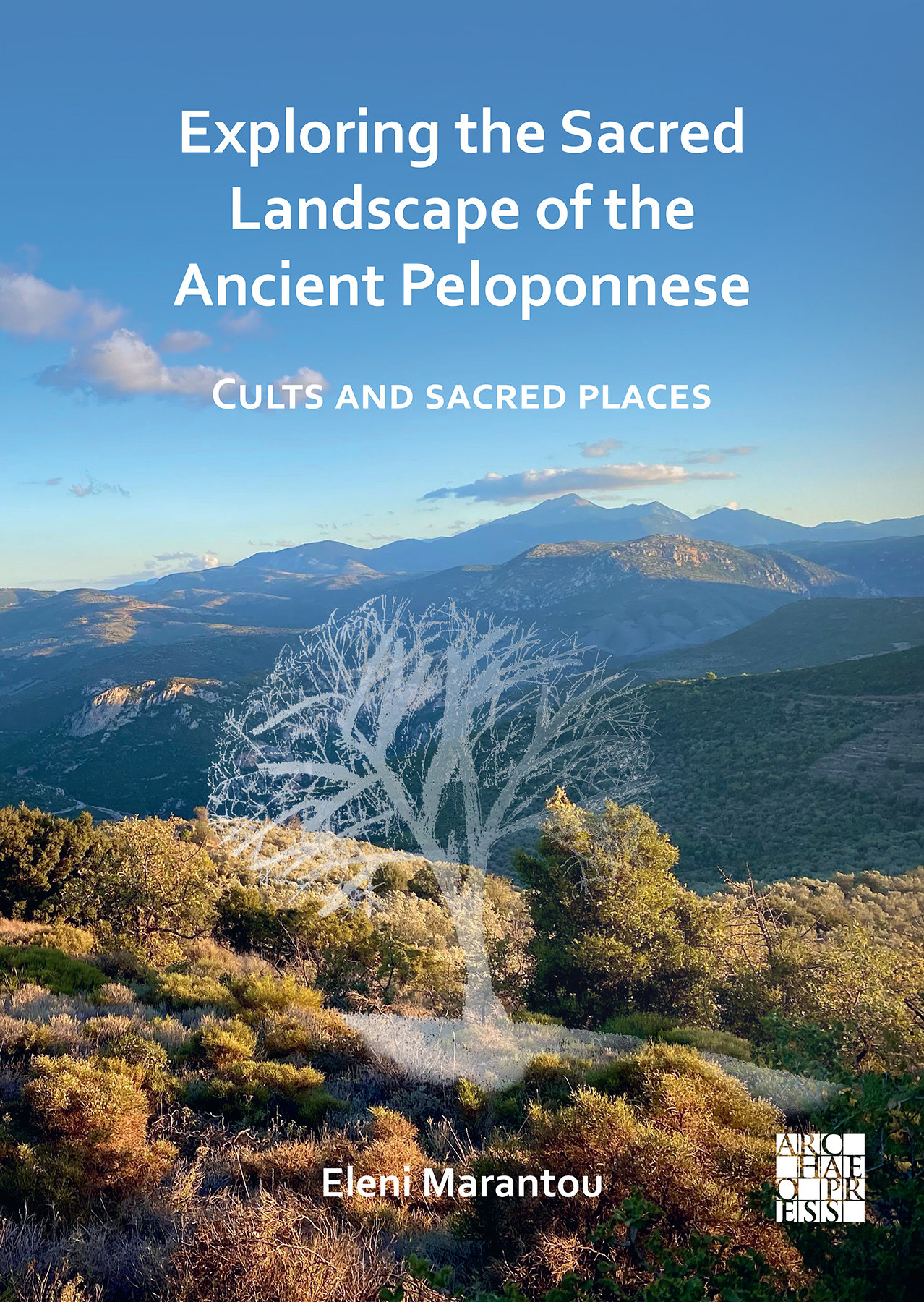
Download Sample PDF
H 245 x W 174 mm
306 pages
3 plans, 4 maps, 8 tables
Published May 2024
ISBN
Paperback: 9781803277714
Digital: 9781803277721
Keywords
Ancient Greece; Religion; Olympian Gods; Chthonian deities; Sacred Places; Sanctuaries; Topography; Peloponnese; Arcadia; Elis; Messenia; Laconia
Related titles
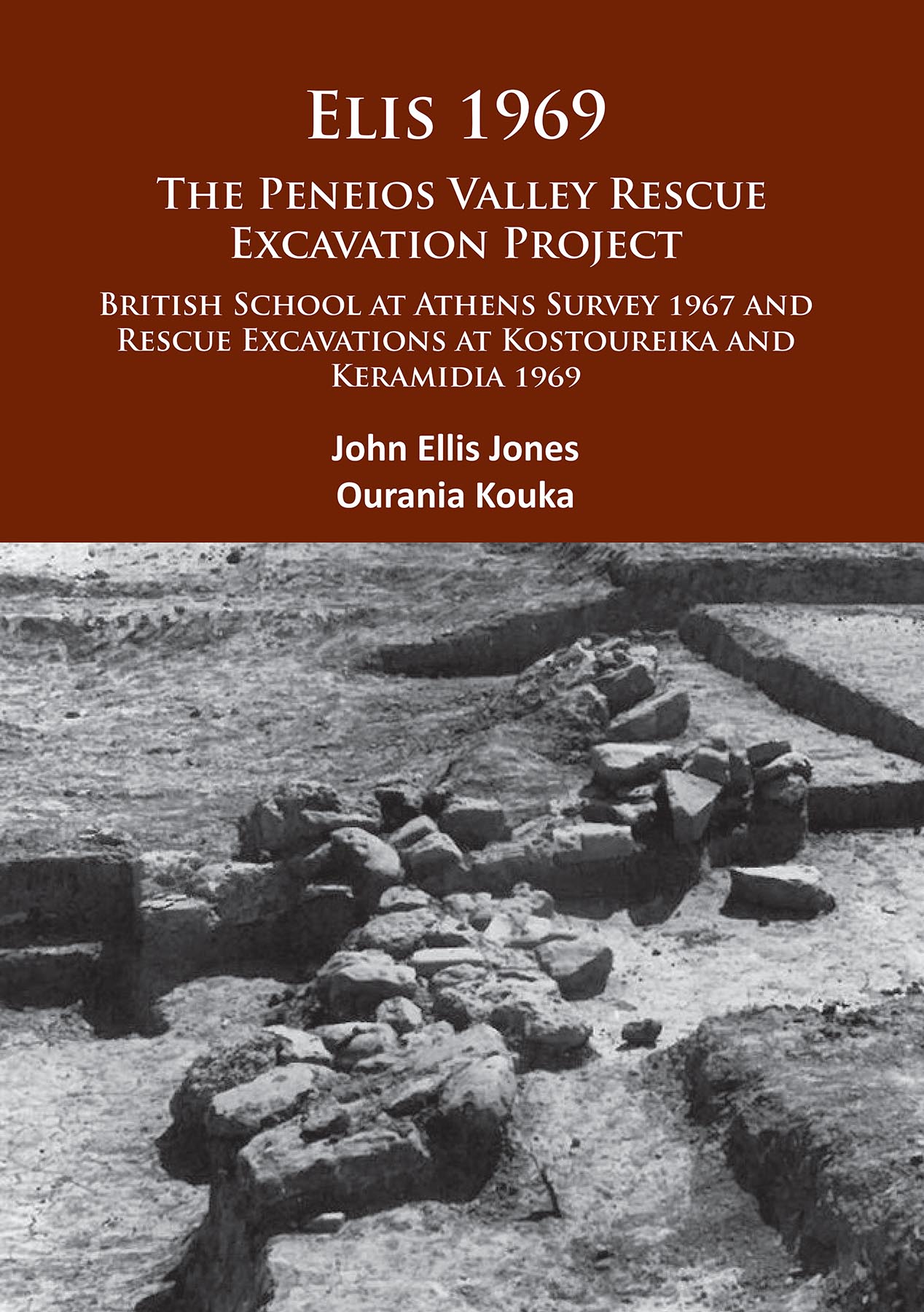
Exploring the Sacred Landscape of the Ancient Peloponnese
Cults and Sacred Places

Paperback
£48.00
Includes PDF
PDF eBook
(personal use)
£16.00
PDF eBook
(institutional use)
£48.00
 Add to wishlist
This book traces the origins of the religious system of the Peloponnese to identify the factors behind its subsequent development from the Geometric to the Classical period. Through a presentation of cult places, the deities worshipped, and the epithets used, the book explores preferences for particular deities and the reasons for this.
Contents
Preface
Introduction
Part One
Chapter 1. Arcadia
Chapter 2. Elis
Chapter 3. Messenia
Chapter 4. Laconia
Part Two
Chapter 5. Special Characteristics
Chapter 6. Deities Worshipped
Chapter 7. Religious, Economic and Social Context
??
Tables
Maps
Bibliography
About the Author
Eleni Marantou holds a PhD from the Ionian University at Corfu and bachelor???s degrees in History and in Archaeology and History of Art from the University of Athens. She has been a member and research assistant of various archaeological institutes and worked as an archaeologist in the Greek Ministry of Culture, taking part in excavations and museum work around Greece. Her main interest is the study of ancient Greek religion, with a particular focus on the therapeutic attributes of the natural elements and their relation to healing deities. She is the author of numerous scientific articles on ancient Greek landscape, religion, mythology and magical practices.
Reviews
'It is clear that much work has been done, even simply by compiling this number of sites with varying types and extents of evidence and scholarship. It is an excellent guidebook to the areas included and should prove a useful and consultable volume for those interested in the religious life of the four study regions.' ??? Shannon M. Dunn (2025): Bryn Mawr Classical Review
???L???auteure y parvient en livrant une masse d???informations bien ordonn??es, lesquelles servent, ... de synth??se ?? l???ensemble, visant ?? mieux saisir le rapport entre hommes et dieux dans l?????le de P??lops.??? [translated] ???The author achieves this by providing a well-organized body of information, ??? which serves as a synthesis for the whole, aiming to better understand the relationship between men and gods on the island of Pelops.??? ??? Jean-Robert Gisler (2025): Museum Helveticum Volume 82
???Der vorliegende Band bietet eine sch??ne ??bersicht ??ber Heiligt??mer und heilige Orte im S??den und Westen der Peloponnes mit instruktiven Angaben auch zu wenig bekannten bzw. beachteten St??tten. Das ist ein gro??er Verdienst der Arbeit. Die Forschungsfragen, welche in den Vordergrund gestellt werden, ordnen sich in den wissenschaftlichen Diskurs ein und geben konstruktive Anregungen.??? [translated] ???The present volume offers a nice overview of sanctuaries and holy places in the south and west of the Peloponnese with instructive information also on little-known or noticed sites. This is a great merit of the work. The research questions that are placed in the foreground are integrated into the scientific discourse and provide constructive suggestions.??? ??? Soi Agelidis (2025): sehepunkte Issue 25, no. 11
???All in all, the author has succeeded in bringing together a large body of widely dispersed material and, on this basis, shedding light on the many facets of cults and sanctuaries in the Peloponnese. This work can now serve as a starting point for more focused investigations of these aspects.??? [translated] ??? Historische Zeitschrift vol. 322/3 (2026)
???In conclusion, the present volume is extremely helpful and???unfortunately???equally problematic. The collection of sacred sites in a systematic catalogue, accompanied by the relevant tables and maps, will become an invaluable guide to anyone interested in the archaeology of religion of the Central and Southern Peloponnese. The descriptions of the individual sites, however, remain epigrammatic and descriptive at their best, the methodology, .. is not really explained anywhere, and the analyses in the second part of the book lie somewhere between the obvious and the superficial. ??? The A. should have taken more time to either truly develop the second (analytical) part into something more original or to focus exclusively on the archaeology of sacred sites discussed in part one, expand their material analysis, and offer an innovative archaeological commentary on the cults and sanctuaries of the central and southern landscapes of the Peloponnese. She tried to do both and ended up with a missed opportunity; still, her book will make any future discussion of the archaeology of religion in this small but important part of the ancient Greek world much easier.??? - Ioannis Mylonopoulos (2025): Kernos 38
Archaeopress Publishing Ltd
First and Second Floor
13-14 Market Square
Bicester
Oxfordshire OX26 6AD
United Kingdom
Tel +44 (0) 1865 311914 | fax +44 (0) 1865 512231 | email info@archaeopress.com
