
Publishing Scholarly Archaeology since 1997
Publishing Scholarly Archaeology since 1997
Log in | My Account | Basket Twitter Facebook LinkedIn
Advanced Search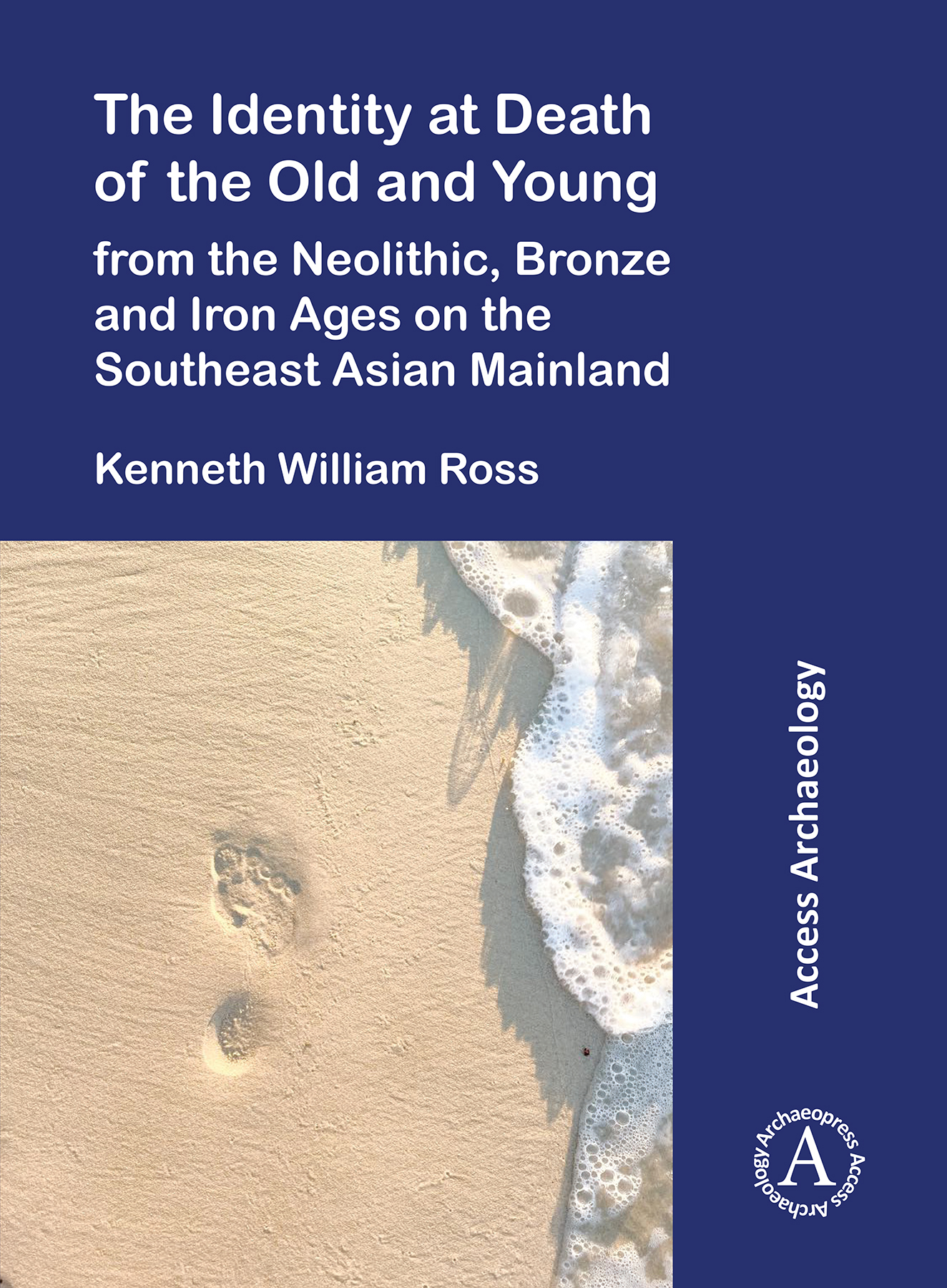
Download Sample PDF
H 276 x W 203 mm
374 pages
50 figures, 52 tables (colour throughout)
Published Jul 2025
Archaeopress Access Archaeology
ISBN
Paperback: 9781805830627
Digital: 9781805830634
Keywords
Southeast Asia; Neolithic; Bronze Age; Iron Age; Mortuary Studies
Related titles
The Identity at Death of the Old and Young from the Neolithic, Bronze and Iron Ages on the Southeast Asian Mainland

Paperback
£65.00
Includes PDF
PDF eBook
(personal use)
Free Download
PDF eBook
(institutional use)
£9.99
 Add to wishlist
This book examines Neolithic to Iron Age burials in mainland Southeast Asia, focusing on age identity at death. Exploring four sites, it reveals diverse mortuary practices and social attitudes toward the old and young, offering the first regional study of elderly individuals in archaeological contexts.
Contents
Abstract
1 Introduction
2 Mortuary Archaeology, Mourning and Grief
3 Gender, Age and Ageing
4 Mainland Southeast Asia: Overview and Site Discussion
5 Materials and Methods
6 Results: Khok Phanom Di
7 Results: Ban Non Wat
8 Results: Ban Lum Khao
9 Results: Noen U-Loke
10 Results: Generalised Linear Modelling
11 Discussion: Age as a Characterisation of Identity in Southeast Asia
12 Regionality and Resilience Theories in the Context of Southeast Asia
13 Conclusion
References
Appendix 1: Reallocated Adult Age Categories
Appendix 2: Funerary Variable Descriptions
Appendix 3: Burials by site including those excluded from analysis
About the Author
Ken William Ross studied, then continued his post-graduate and doctoral research, at the School of Archaeology and Anthropology, Australian National University. Primary research interests include mortuary archaeology and age-identities in prehistory.
Reviews
‘Ross delivers a comprehensive analysis of mortuary behaviour in Southeast Asia: he crunched a huge amount of diverse data for his core questions and correlated it into a cohesive result to establish simultaneously a picture of ‘normative’ burials in the research region, from which burials of young and old people to some level divert. The results deliver ideas for future research, including questions about gender and the gaining of more insights on the death and life perceived by past communities.’ – Marion Ucklemann (2025): ANTIQUITY Volume 99
Archaeopress Publishing Ltd
First and Second Floor
13-14 Market Square
Bicester
Oxfordshire OX26 6AD
United Kingdom
Tel +44 (0) 1865 311914 | fax +44 (0) 1865 512231 | email info@archaeopress.com
