
Publishing Scholarly Archaeology since 1997
Publishing Scholarly Archaeology since 1997
Log in | My Account | Basket Twitter Facebook LinkedIn
Advanced Search
Download Sample PDF
H 290 x W 205 mm
299 pages
164 figures, 20 tables (colour throughout)
Published Mar 2026
ISBN
Hardback: 9781805830764
Digital: 9781805830771
Keywords
Megaliths; Mobility; Isotopes; Biomolecular Studies; Osteometrics; Radio Carbon; Cremations; Geomagnetic Prospection; LiDAR; Materiality; Memory; Cosmological Acquisition; Social Dynamics Ontologies; Farming Practices; Construction Techniques; Landscape; 3D Models; Ditch Enclosures; Dolmens; Cairns; Pits; Earthworks; Timber Circle; Rock-cut & Passage Tombs; Funnel Beaker Culture; Bell-Beaker; Europe; France; Iberia; Scandinavia; Scotland; Germany; Ireland; western Mediterranean Islands
Related titles
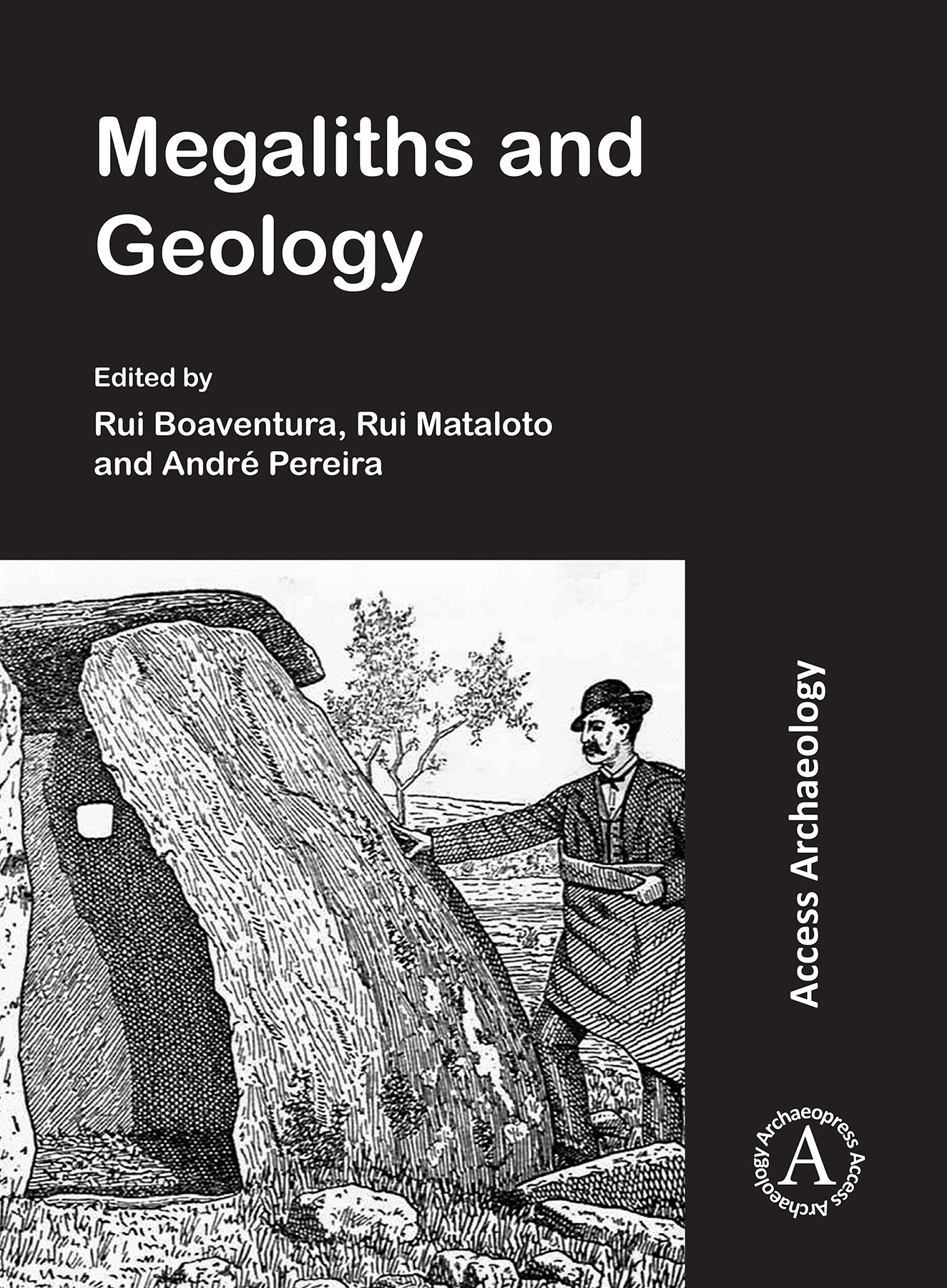
Megalithic Societies: Old Questions, New Narratives
Edited by Gail M. Higginbottom, Jadranka Verdonkschot, Chris Scarre, A. C??sar Gonz??lez-Garc??a, Felipe Criado-Boado

 Add to wishlist
This volume features 16 papers from the European Megalithic Studies Group, exploring monuments across Europe. Topics include mobility, social structures, and symbolism, using methods like isotopic analysis, 3D modelling, and excavation. It reveals new insights into megalithic traditions and practices.
Contents
List of Figures and Tables
List of Editors and Main Affiliations
List of Symposium Speakers
List of Volume Contributors (Alphabetical)
List of Chapter Reviewers
Contributor Biographies
Preface
Chapter 1: Time, mobility and society: new approaches to megalithic monumentality in western and northern Europe ??? Chris Scarre
Chapter 2: Towards a high-resolution chronology of major megalithic monuments: Menga and Montelirio (Andalusia, Spain) ??? Leonardo Garc??a Sanju??n, Marta D??az-Guardamino and Francisco Jos?? S??nchez-D??az
Chapter 3: Dissolving and contrasting. The secondary deposition of human cremains at Perdig??es enclosure (3rd millennium BC, South Portugal) ??? Antonio Valera, Lucy Shaw Evangelista and Ricardo Godinho
Chapter 4: Para-megalithism: alternative routes to understanding big stones ??? Jessica Smyth
Chapter 5: Funnel Beaker Culture megaliths in northern Germany. A comparison of architectural elements between three regions ??? Anja Behrens
Chapter 6: Sardinian megalithic and rock-cut tombs in the context of the prehistoric western Mediterranean ??? Maria Grazia Melis
Chapter 7: Megaliths: the singularity of each element. Appropriation of distinct entities versus geometric constructions ??? Luc Laporte
Chapter 8: Current Research on Westphalian Megaliths ??? Kerstin Schierhold
Chapter 9: Preserved and demolished megaliths from the Danish Funnel Beaker Culture ??? Niels H. Andersen
Chapter 10: ???Linking megaliths???. A computational approach to the study of movement and mobility in the megalithic complex of Galicia (Northwest of the Iberian Peninsula) ??? Miguel Carrero-Pazos and Devin A. White
Chapter 11: Multi-method geophysical survey in megalithic landscapes: case studies from Ireland and Sweden ??? Stephen Davis, Tony Axelsson, Knut Rassmann and Karl-G??ran Sj??gren
Chapter 12: Geoglyphs, petroglyphs, and megaliths ??? Richard Bradley
Chapter 13: Building Space. A structural model of space in megalithic landscapes ??? Felipe Criado-Boado and Jadranka Verdonkschot
Chapter 14: Fathoming megaliths: social proxies and indictors for the study of the dolmens ??? Gail Higginbottom
Chapter 15: A reappraisal of megalithic orientations from Iberia and beyond: towards models of interpretation ??? A. C??sar Gonz??lez-Garc??a
Chapter 16: Monuments of the dynasties ??? monuments of the people? Megaliths in Europe ??? Johannes M??ller
About the Author
Gail Higginbottom has a PhD (Arts, Adelaide) and is a postdoctoral researcher (XSCAPE Material Minds 2024) at the Institute of Heritage Sciences (INCIPIT-CSIC, Santiago de Compostela).
Jadranka Verdonkschot has a PhD in Archaeology from the Universities of Amsterdam and Alcal?? de Henares and is a postdoctoral researcher for XSCAPE Material Minds at the Institute of Heritage Sciences (INCIPIT-CSIC, Santiago de Compostela).
Chris Scarre has a PhD from the University of Cambridge and is Emeritus Professor of Archaeology at Durham University.
A. C??sar Gonz??lez-Garc??a has a PhD in Astronomy from the RijkUniversiteit Groningen and is a staff researcher at the Institute of Heritage Sciences (INCIPIT-CSIC, Santiago de Compostela).
Felipe Criado-Boado, Professor of Research, Institute of Heritage Sciences (INCIPIT-CSIC, Santiago de Compostela). He is Honorary Research Associate of McDonald Institute for Archaeological Research and Research Professor at the CSIC.
Reviews
'This diverse compilation is not a coherent narrative but delivers a great starting point to look into the new methods and research that enlighten us and provide possibilities and ideas for future studies on the Neolithic.' ??? New Book Chronicle (2026): Antiquity, Volume 100, Issue 412
Archaeopress Publishing Ltd
First and Second Floor
13-14 Market Square
Bicester
Oxfordshire OX26 6AD
United Kingdom
Tel +44 (0) 1865 311914 | fax +44 (0) 1865 512231 | email info@archaeopress.com
