
Publishing Scholarly Archaeology since 1997
Publishing Scholarly Archaeology since 1997
Log in | My Account | Basket Twitter Facebook LinkedIn
Advanced Search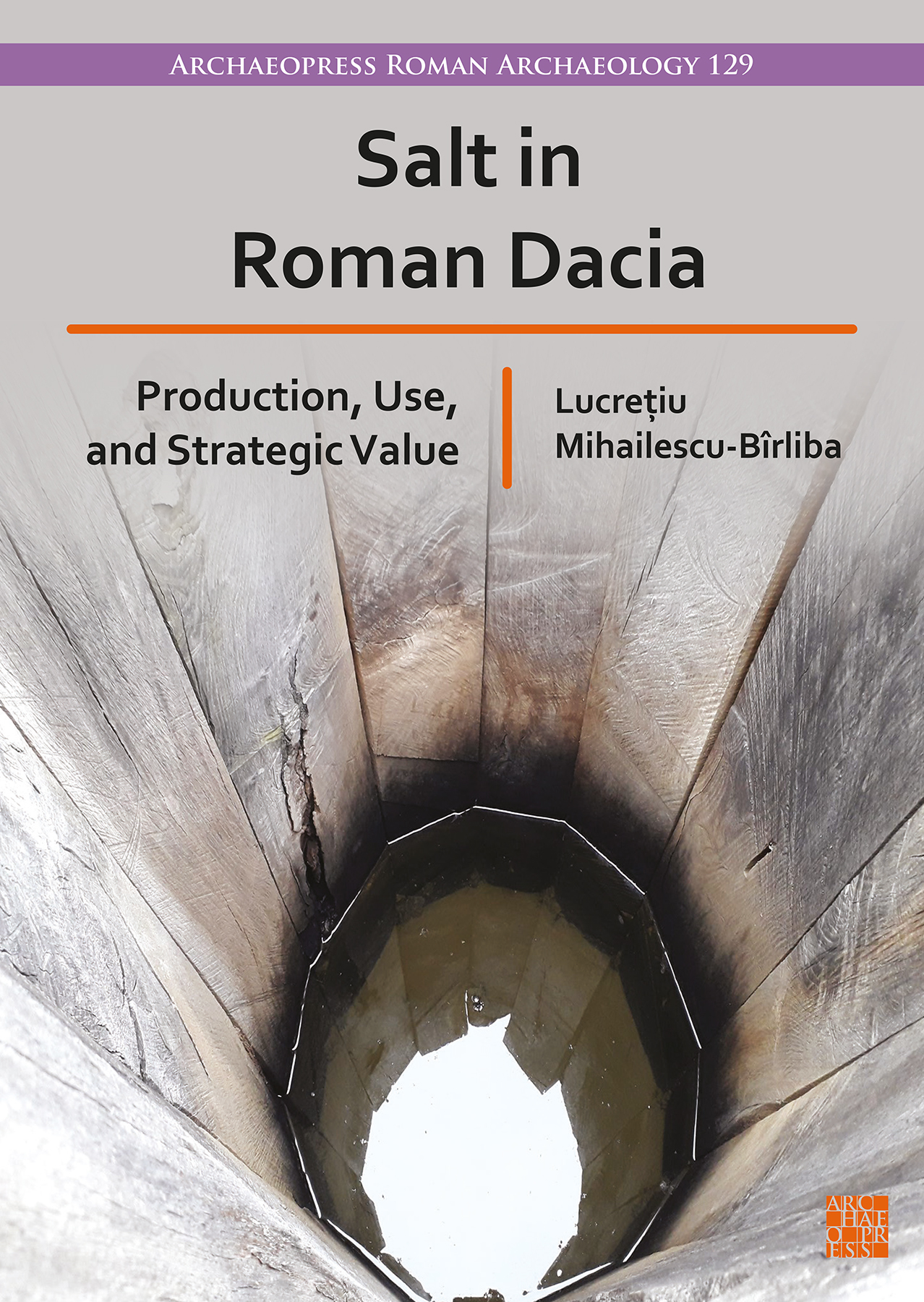
Download Sample PDF
H 245 x W 174 mm
130 pages
51 figures (colour throughout)
Published Nov 2025
ISBN
Paperback: 9781805831112
Digital: 9781805831129
Keywords
Roman Dacia; salt exploitation; salt administration; salt production; salt use; saltworks; Roman army
Related titles
Archaeopress Roman Archaeology 129
Salt in Roman Dacia
Production, Use, and Strategic Value
By Lucrețiu Mihailescu-Bîrliba

Paperback
£35.00
Includes PDF
PDF eBook
(personal use)
£16.00
PDF eBook
(institutional use)
£35.00
 Add to wishlist
This volume examines salt exploitation in Roman Dacia, a topic often overlooked compared to other resources. It analyses archaeological and epigraphic evidence to understand production, administration, and military links, offering a broader view of salt???s role in the province and the Roman world.
Contents
List of Figures
Introduction
1. Researches on salt production and salt industry in the Roman Empire
2. Researches on salt archaeology and salt history in Roman Dacia
I. Salt exploitation in Roman Dacia: archaeological evidence
1. Salt exploitation in pre-Roman period
2. Salt exploitation in Roman period
3. Conclusions
II. Salt administration in Roman Dacia
1. Introduction
2. Conductores
3. Lower-ranked personnel of the saltwork administration
4. Conclusions
Annex 1: Supplementum epigraphicum
Annex 2: Salt resources in the proximity of inscription locations
III. The Roman army and salt exploitation in Dacia
1. Introduction
2. Military camps and fortifications near salt resources
3. Conclusions
IV. Religious aspects of salt mining in Roman Dacia
1. The cult of Terra Mater
2. The cult of other divinities related to mining activities
3. Neptune and Salacia in Roman Dacia
4. Conclusions
V. Conclusions
Supplementum Epigraphicum
Bibliography
About the Author
Lucre??iu Mihailescu-B??rliba is Professor of Ancient History at ???Alexandrui Ioan Cuza??? University of Ia??i. He studied at Ia??i (Romania), Poitiers and Paris (France) and completed his PhD in Cluj-Napoca and Paris. His work deals especially with Roman social and economic history, with migration, colonisation and Romanisation. He was DAAD-Fellow at K??ln, Marburg, Konstanz and Trier, and Visiting Professor at Innsbruck and Valenciennes.
Archaeopress Publishing Ltd
First and Second Floor
13-14 Market Square
Bicester
Oxfordshire OX26 6AD
United Kingdom
Tel +44 (0) 1865 311914 | fax +44 (0) 1865 512231 | email info@archaeopress.com
