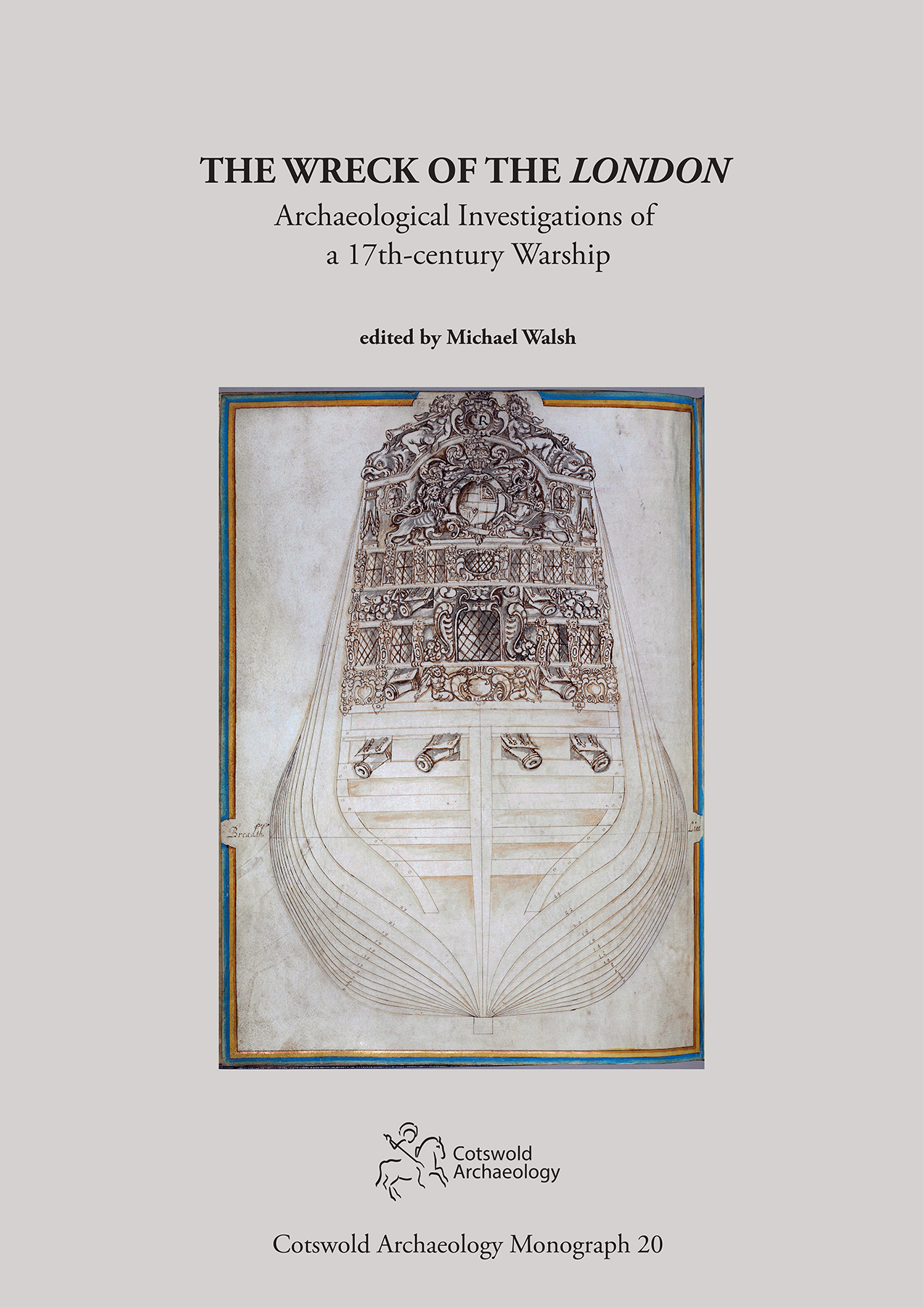
The Wreck of the London
Archaeological Investigations of a 17th-century Warship
Edited by Michael Walsh
Hardback
£35.00
This title is not yet published. You may pre-order, with print copies despatching, and digital copies available to download via your account page, immediately following publication.
Add to basket
Add to wishlist
Archaeological investigations at the site of the London wreck reveal the remains of a 17th-century English second-rate warship built in 1656. The London served in the Cromwellian and Restoration navies, including the fleet that returned Charles II from exile, before sinking in the Thames Estuary in 1665.
READ MORE
Since March 2014 a programme of archaeological excavation, geophysical survey and finds assessments has been undertaken by Cotswold Archaeology (CA) and its specialist sub-contractors on the site of the London wreck. The London was an English second-rate ship-of-the-line built at Chatham in 1656 during the Interregnum. The London served in both the Cromwellian and Restoration navies, saw action during the Anglo-Spanish War in 1657 and participated in the English show of strength during the Battle of the Sound. At the time of the Restoration in 1660 the ship formed part of the fleet that brought the future King Charles II back from exile in the Netherlands. The London sank in the Thames Estuary in 1665 while preparing for the Second Anglo-Dutch War. The ship was blown apart by an explosion, probably of its gunpowder magazine, and, as mentioned in Samuel Pepys’ diary entry of 8 March 1665 only 24 personnel survived. This volume presents a brief summary of the excavations and the results of the assessments of the recovered finds, subsequent analyses and the conservation of the materials. It considers the archaeological, historical and documentary evidence collectively in its local, regional and national context. The remarkable results of the conservation of the broad range and variety of recovered artefacts and material types have presented an ideal opportunity to contribute to the public understanding of the principles, practices and achievements of conservation science through this volume and online resources.