
Publishing Scholarly Archaeology since 1997
Publishing Scholarly Archaeology since 1997
Log in | My Account | Basket Twitter Facebook LinkedIn
Advanced Search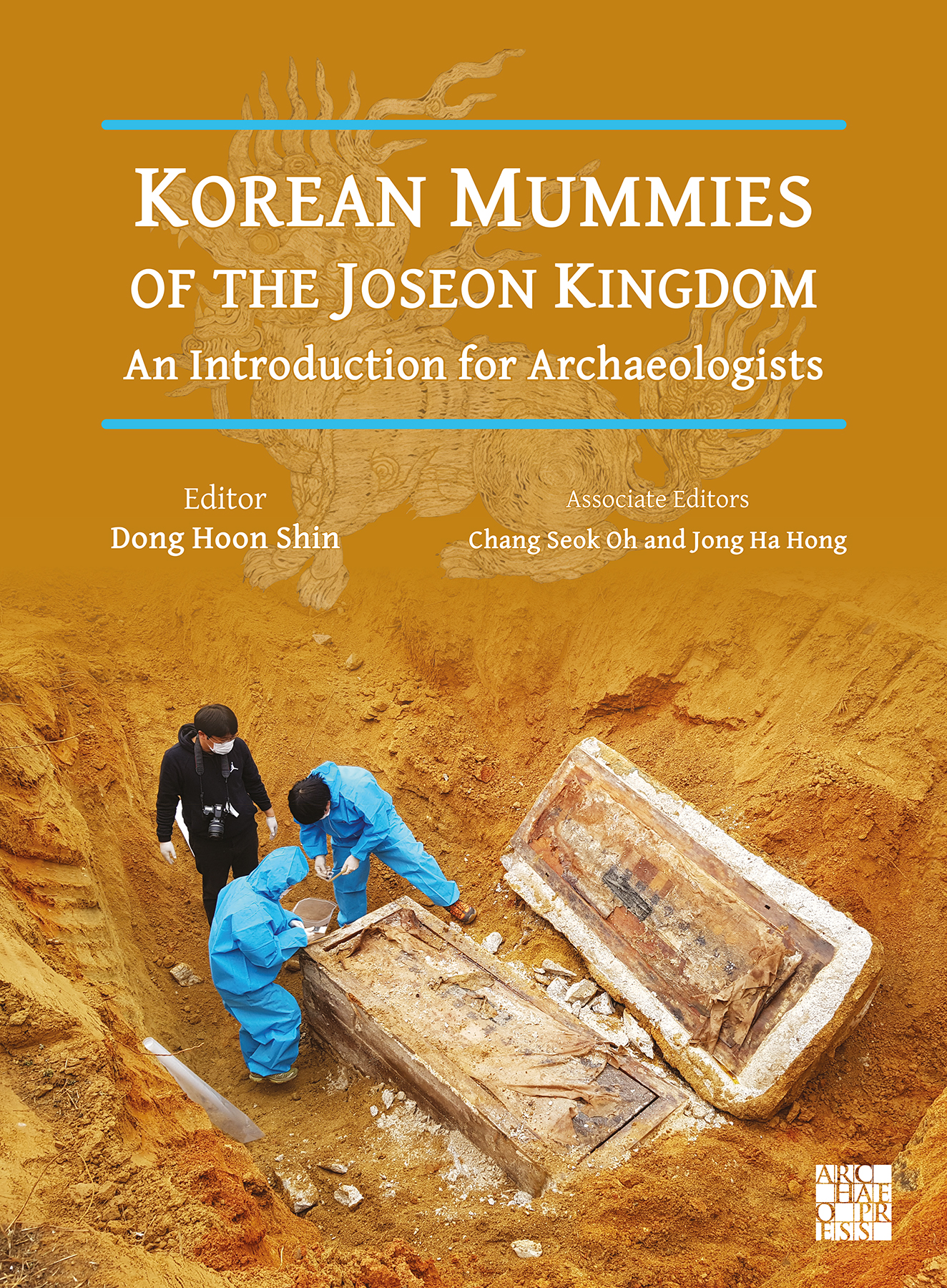
Download Sample PDF
H 203 x W 276 mm
276 pages
256 figures, 3 tables (colour throughout)
Published Jan 2026
ISBN
Hardback: 9781805832058
Digital: 9781805832065
Related titles
Korean Mummies of the Joseon Kingdom
An Introduction for Archaeologists
Edited by Dong Hoon Shin
Associate Editor Chang Seok Oh, Jong Ha Hong

Hardback
£65.00
Includes PDF
PDF eBook
(personal use)
£16.00
PDF eBook
(institutional use)
£65.00
 Add to wishlist
This book examines Joseon Dynasty mummies (15th???19th c.), highlighting their exceptional preservation and scientific value. It integrates historical and archaeological perspectives with biomedical research to explore cultural contexts, offering insights beyond Korea???s borders.
Contents
About the Author
Dong Hoon Shin graduated from the Seoul National University College of Medicine (MD) in South Korea, where he also earned his PhD in Anatomy. His research has primarily focused on gaining scientific insights into the health and disease status of premodern populations. Using a combination of anatomical, histological, and molecular techniques, he has uncovered the physical and pathological traits of ancient peoples across various historical periods. He has been recognized as a National Geographic Explorer and a speaker at the Kavli Frontiers of Science. He is currently a full professor in both the Department of Anatomy and Cell Biology and the Institute of Forensic and Anthropological Science at Seoul National University.
Chang Seok Oh earned his PhD in Anatomy from Seoul National University. His research focuses on identifying the bioanthropological characteristics of ancient populations and the diseases that affected them. To achieve this, he conducts studies on ancient human remains, including genetic analyses. He is currently an assistant professor at Eulji University, where he teaches courses in biology, anatomy, and bioanthropology.
Jong Ha Hong studied in Seoul National University (PhD) and currently works as a research professor in Kyung Hee University. His research interest has been mainly focused upon acquiring scientific information of pre-modern animals and people???s health, disease and migration patterns in history. He is involved in studies at archaeological sites across Eurasia, broadening the geographical range of his research.
Archaeopress Publishing Ltd
First and Second Floor
13-14 Market Square
Bicester
Oxfordshire OX26 6AD
United Kingdom
Tel +44 (0) 1865 311914 | fax +44 (0) 1865 512231 | email info@archaeopress.com
